

Steel windows define the space the moment you step into this kitchen.
The room feels open and calm, yet grounded, with light moving freely without washing out the design.
That balance comes from structure doing its job quietly in the background.
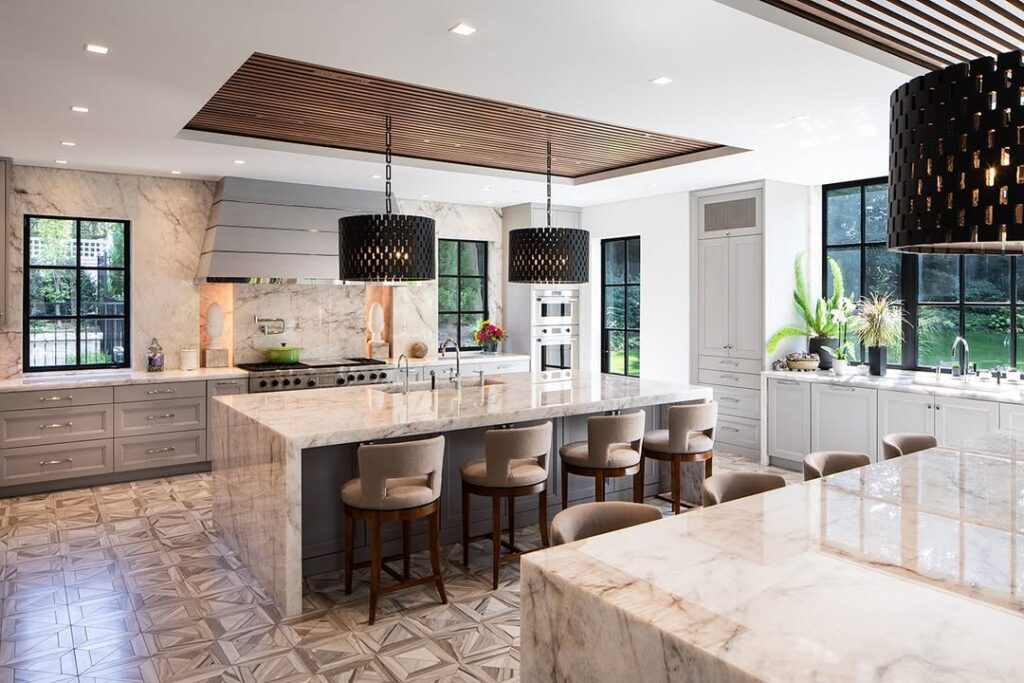
In this setting, steel windows are not decorative add-ons.
They shape how the kitchen feels, how it connects to the outdoors, and how the materials around them read as intentional rather than excessive.
A Kitchen Designed Around Steel Windows
This kitchen is planned around daylight and proportion.
Slim steel frames allow larger glass areas, which makes the room feel expansive without changing its footprint.
The dark steel grid adds contrast and visual control.
It keeps marble, wood, and soft finishes from overpowering the space, acting like a frame that sharpens everything inside it.
Why Steel Windows Work in Modern Homes
Slim Profiles Without Weakness
Steel carries strength naturally, which allows frames to stay thin without compromising performance.
Other materials need bulk to achieve the same rigidity, which reduces glass area and disrupts clean lines.
With steel windows, more daylight enters the space while the structure remains solid.
That combination is why steel continues to outperform alternatives in high-end residential design.
| Material | Frame Thickness | Structural Strength | Glass Area |
|---|---|---|---|
| Steel windows | Slim | Very high | Maximum |
| Aluminum | Medium | Medium | Moderate |
| Wood | Thick | Lower | Limited |
Designed for Open Floor Plans
Open layouts demand consistency across rooms. Steel maintains that consistency, allowing kitchens, living areas, and dining spaces to flow together visually.
Interior steel windows also create separation where required, especially in fire-rated zones.
This approach preserves openness while meeting code requirements.
Energy-Efficient Steel Windows Explained
Performance expectations have changed. Steel window systems have evolved to meet modern energy standards without losing their defining aesthetic.
Thermally Broken Steel Frames
Thermal break technology separates interior and exterior steel surfaces. This limits heat transfer and reduces condensation, which is especially important in kitchens and high-use spaces.
Thermally broken steel windows are tested to meet strict performance benchmarks .
The result is comfort that feels effortless rather than engineered.
Glass Options That Control Heat and Light
Glass does most of the heavy lifting when it comes to energy control.
Steel frames simply allow that glass to perform at its best.
Insulated units, Low-E coatings, and acoustic options help manage temperature, glare, and sound.
The room stays bright without feeling exposed.
| Glass Feature | Benefit |
|---|---|
| Insulated glazing | Temperature control |
| Low-E coatings | Reduced solar gain |
| Acoustic glass | Sound control |
| Triple glazing | Maximum efficiency |
Fire-Rated Steel Windows Without Visual Compromise
Safety requirements no longer mean sacrificing design. Steel allows fire-rated openings to feel intentional rather than industrial.
Where Fire Ratings Matter Inside the Home
Kitchens often sit at the center of fire planning. Interior separations may require rated assemblies without blocking light or sightlines.
Optimum fire-rated systems provide ratings from 45 to 90 minutes while maintaining clarity and proportion.
Fire Ratings That Still Look Residential
Frames remain slim and consistent with non-rated openings.
Clear fire-rated glass keeps spaces bright and visually connected.
With steel windows, safety integrates naturally into the architecture instead of standing apart from it.
Matching Existing Windows Without Guesswork
Consistency is critical in renovation and restoration projects.
A single mismatched window can disrupt an entire elevation or interior rhythm.
Restoration and Replacement Projects
Steel profiles can be replicated with precision. Sightlines, muntin patterns, and proportions align with existing units to preserve the original intent.
This accuracy matters in both historic properties and modern homes seeking continuity.
Custom Colors and Finishes
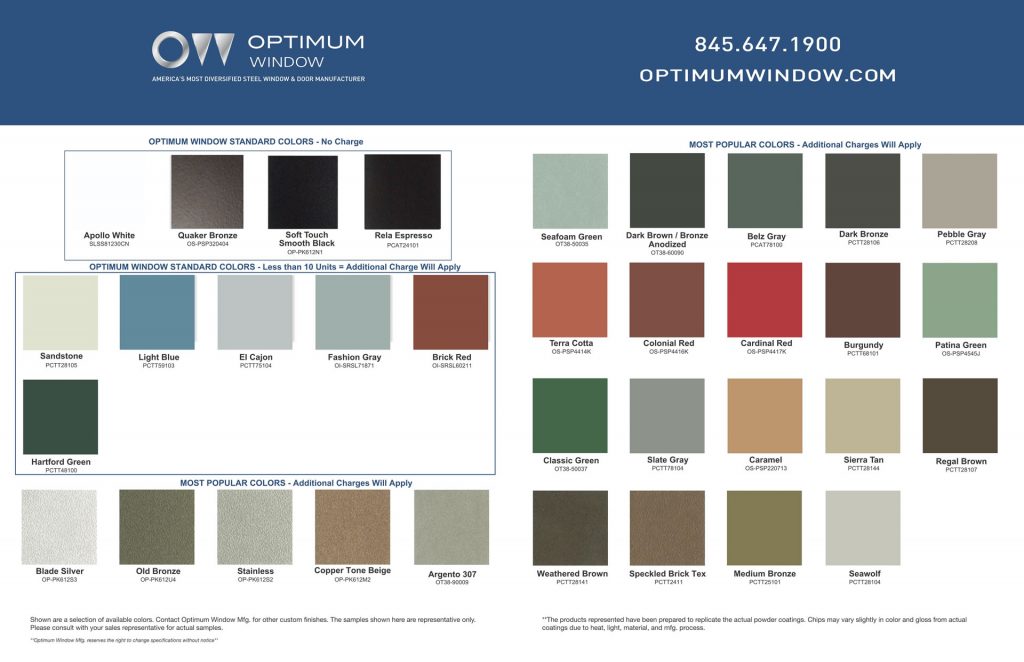
Powder-coated finishes offer durability and long-term color stability.
Custom color matching ensures new windows blend seamlessly with surrounding materials.
Rather than drawing attention to themselves, steel windows support the overall design.
Steel Windows in High-Use Spaces Like Kitchens
Kitchens place constant demands on materials.
Heat, moisture, and daily activity expose weaknesses quickly.
Steel handles these conditions with ease.
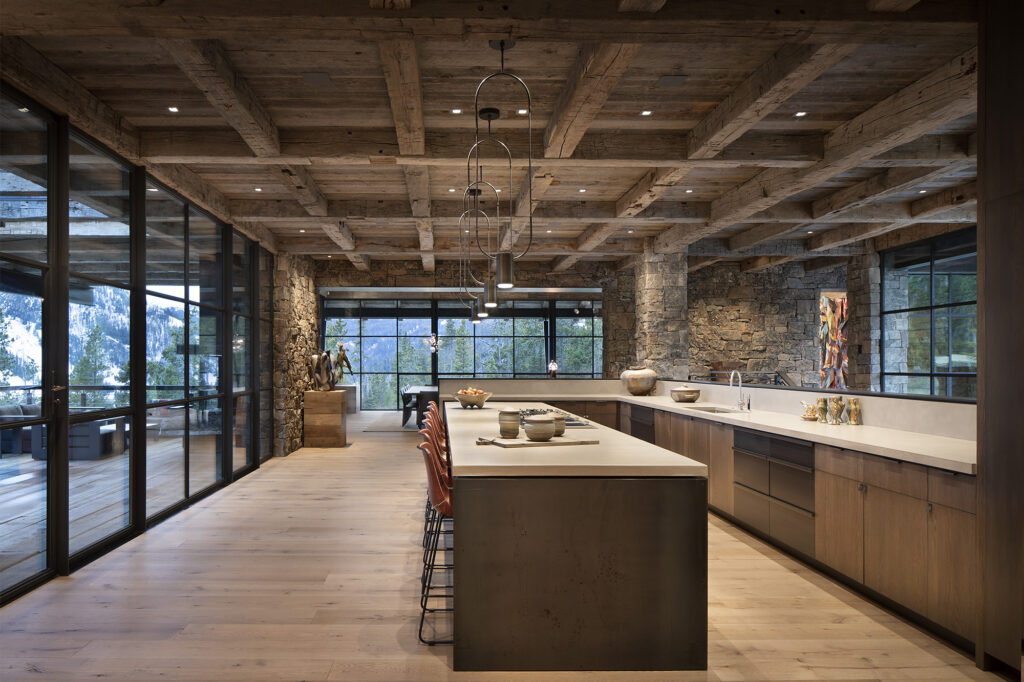
Moisture Resistance and Longevity
Steel does not swell, warp, or shift over time.
Protective finishes maintain performance even in environments with frequent temperature changes.
This stability keeps seals tight and operation smooth for decades.
Easy Maintenance in Active Homes
Cleaning steel frames is straightforward.
Finishes resist staining, fading, and wear from regular use.
Maintenance stays minimal, even in busy family kitchens.
Comparing Steel Windows to Other Materials
| Feature | Steel windows | Aluminum | Wood |
|---|---|---|---|
| Fire-rated options | Yes | Rare | Limited |
| Energy performance | High | Moderate | Moderate |
| Sightlines | Slim | Medium | Thick |
| Lifespan | Decades | Shorter | Maintenance-heavy |
Why Architects Keep Choosing Optimum Steel Windows
Made in the USA
Each unit is fabricated domestically with fully welded construction.
Every project is built to order, allowing precision from design through installation.
Built for Design Freedom
Large openings remain structurally sound.
Custom configurations stay accurate to approved drawings.
Design intent carries through without compromise.
One Window System. Every Requirement Met.
Energy efficiency is addressed without visual tradeoffs.
Fire safety integrates cleanly into the layout while preserving openness.
That balance is why steel windows continue to define premium residential spaces.