

Insulation glass is the backbone of high-performance steel windows, controlling heat, sound, and comfort from the inside out.
What Is Insulation Glass?
Definition and Core Components
Insulation glass, also called an insulating glass unit (IGU)—is made of two or more panes of glass separated by a sealed space filled with air or gas. That sealed space acts as a barrier, slowing the transfer of heat between the interior and exterior.
Each layer plays a role. The glass provides structure and visibility. The spacer creates separation. The air or gas layer reduces thermal movement.
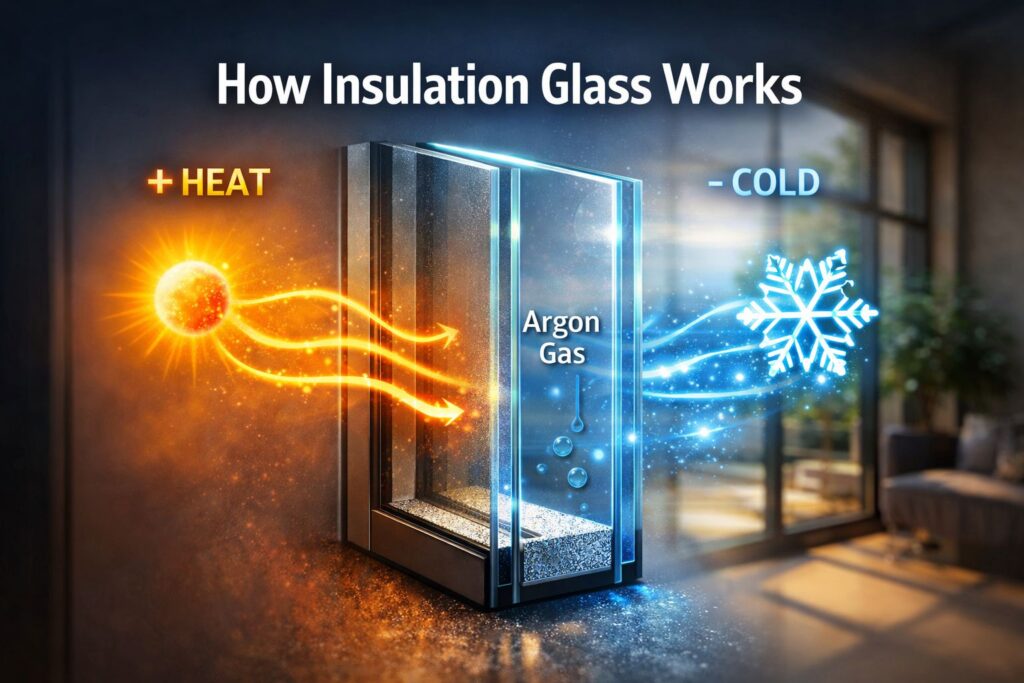
How Insulation Glass Works
Heat naturally moves toward cooler areas. Standard single-pane glass allows that movement to happen fast.
With insulation glass, the sealed gap between panes disrupts that flow. Add argon gas or Low-E coatings, and the system reflects heat back toward its source. That means cooler interiors in summer and warmer interiors in winter.
Single vs Double vs Triple Glazing
Type Layers Performance Level Single 1 pane Low Double 2 panes Standard Triple 3 panes High
Optimum systems support double and triple glazing up to 1 3/8” thickness, allowing projects to scale performance based on climate and design goals
Why Insulation Glass Matters in Steel Windows
Energy Efficiency Gains
Steel is strong, but it conducts heat quickly. Without the right glazing, energy loss becomes a real issue.
When we combine insulation glass with thermally broken steel frames, heat transfer is interrupted at multiple points. The glazing slows it down, and the frame stops it from bridging through the structure. This combination is what allows steel windows to meet modern energy standards.
Thermal Comfort Indoors
Comfort isn’t just about temperature, it’s about consistency. Cold spots near windows are a common problem with outdated systems.
With insulated glazing, interior surfaces stay closer to room temperature. That eliminates drafts and makes large glass openings feel comfortable year-round.
Noise Reduction Benefits
Multiple panes of glass don’t just help with temperature, they also reduce sound transmission. Each layer absorbs and disrupts sound waves.
This is especially useful in urban environments where exterior noise can affect interior comfort. Insulation glass helps create quieter, more controlled interior spaces.
How Optimum Integrates Insulation Glass
Thermally Broken Steel Systems
Thermal breaks are built directly into the steel frame. They act as a separator between interior and exterior metal surfaces.
Without this break, steel would transfer heat straight through. With it, the system performs more like a high-efficiency barrier.
Advanced Glazing Thickness Options
Flexibility in glazing is key for performance. Optimum systems accommodate 1” up to 1 5/8” glazing infill, allowing for a wide range of insulated glass configurations
This supports:
Double glazing for standard performance Triple glazing for maximum efficiency Laminated or acoustic glass for specialized applications
NFRC Rated Performance
Performance isn’t theoretical. Optimum systems are tested and NFRC rated, meaning their energy values are verified through standardized testing
This gives architects and builders confidence that what’s specified will perform in real conditions.
Types of Insulation Glass Used in Modern Projects
Double Glazed Units
Double glazing is the most widely used option. It provides a strong balance between cost and performance.
Two panes with an air or gas-filled cavity significantly reduce heat transfer compared to single-pane systems.
Triple Glazed Systems
Triple glazing adds another layer of protection. It increases insulation and reduces energy loss even further.
This setup is often used in colder climates or projects targeting higher performance standards.
Low-E and Argon Gas Filled Glass
Low-E coatings reflect infrared heat while allowing visible light to pass through. Argon gas, placed between panes, slows down thermal movement.
Together, they improve performance without affecting clarity or design intent.
Performance Metrics That Matter
U-Value Explained
The U-value measures how much heat passes through a window. Lower numbers mean better insulation and less energy loss.
Solar Heat Gain Coefficient (SHGC)
SHGC measures how much solar heat enters through the glass. Lower values help keep interiors cooler in warmer climates.
Visible Transmittance and CR
Metric Meaning Why It Matters U-Value Heat loss rate Lower energy use SHGC Solar heat gain Interior comfort VT Light transmission Daylighting CR Condensation resistance Moisture control
Optimum systems can reach U-values as low as .19 in triple-glazed configurations, putting steel windows in line with high-performance alternatives
Insulation Glass in Fire-Rated Steel Windows
Safety Meets Performance
Fire-rated windows are designed to contain flames and withstand extreme heat. That doesn’t mean sacrificing insulation performance.
Modern systems combine fire-rated glazing with insulated configurations to meet both safety and energy goals.
Multi-Functional Glazing Options
Fire-rated systems can include:
Wire glass Ceramic glass Laminated safety glass
These can be paired with insulated units to deliver multiple layers of performance in one system.
Thermal + Fire Protection Balance
Optimum fire-rated windows support insulated glass configurations with glazing up to 1” thickness, allowing projects to meet both fire codes and energy standards
This creates a system that protects against heat transfer and fire spread at the same time.
Comparing Insulation Glass vs Standard Glass
Feature Insulation Glass Standard Glass Energy Efficiency High Low Noise Reduction Strong Minimal Condensation Control High Poor Comfort Stable Inconsistent Long-Term Value High Limited
Standard glass allows heat and sound to pass through easily. Insulation glass adds layers of control, improving both performance and comfort.
Design Benefits for Architects and Builders
Larger Glass Openings
Steel makes large openings possible. Insulation glass makes them efficient.
This combination allows expansive views without sacrificing performance.
Slim Steel Sightlines
Steel frames are naturally thin. That means more glass and less frame.
With insulated glazing, those slim profiles still meet modern energy expectations.
Custom Configurations
Every project has different requirements. Glass thickness, coatings, and configurations can be adjusted to match performance targets and design goals.
Choosing the Right Insulation Glass System
Climate Considerations
Climate drives performance decisions. Hot regions benefit from lower SHGC values, while colder areas benefit from lower U-values and triple glazing.
Project Type
Project Type Recommended Glass Residential Double or triple glazing Commercial Double + Low-E Landmark Custom insulated units
Budget vs Performance
Higher-performing glass comes with a higher upfront cost. At the same time, it reduces long-term energy use and improves comfort.
For most projects, the long-term value outweighs the initial investment.
Why Steel Windows + Insulation Glass Is the Best Combo
Strength Meets Efficiency
Steel delivers structural strength and longevity. Insulation glass delivers thermal performance.
Together, they create a system that performs on every level.
Longevity and Sustainability
Steel is durable and recyclable. Insulated glazing reduces energy demand over time.
This combination supports long-term sustainability goals.
Modern Aesthetic with Performance
Architects want clean lines and large openings. Builders want performance and durability.
Steel windows with insulation glass deliver both without compromise.
Final Thoughts on Insulation Glass
Insulation glass turns steel windows into high-performance systems, balancing energy efficiency, comfort, and design without compromise.
 Optimum