That distinction trips up many buyers. They pick a color sample and assume the product is settled. Black frames create strong contrast, slim architectural definition, and a visual border around the view. This guide covers design, materials, performance, cost, and selection so you can compare products on more than appearance.
Key Takeaways
- Black is a design choice; durability and energy performance come from material, glass, finish, and construction.
- Right proportions make black frames work on modern, farmhouse, historic, and commercial buildings.
- Color alone doesn't set the price. Material, size, glass, and customization do.
- Compare NFRC data, finish warranties, and color configurations before choosing.
Why Black Frame Windows Continue to Appeal
Visual contrast and architectural character
Dark frames create definition against light siding, brick, stone, stucco, and interior walls. Architect Dominic Bagnato calls black a "forgiving color" in Houzz's coverage, which shows black-framed windows in modern, industrial, Victorian-era, and church-conversion projects.
That range matters. Black reads crisp and modern on a contemporary house, yet it also works on traditional and historic-inspired designs when the profile, grill pattern, and proportions fit.
Design versatility across project types
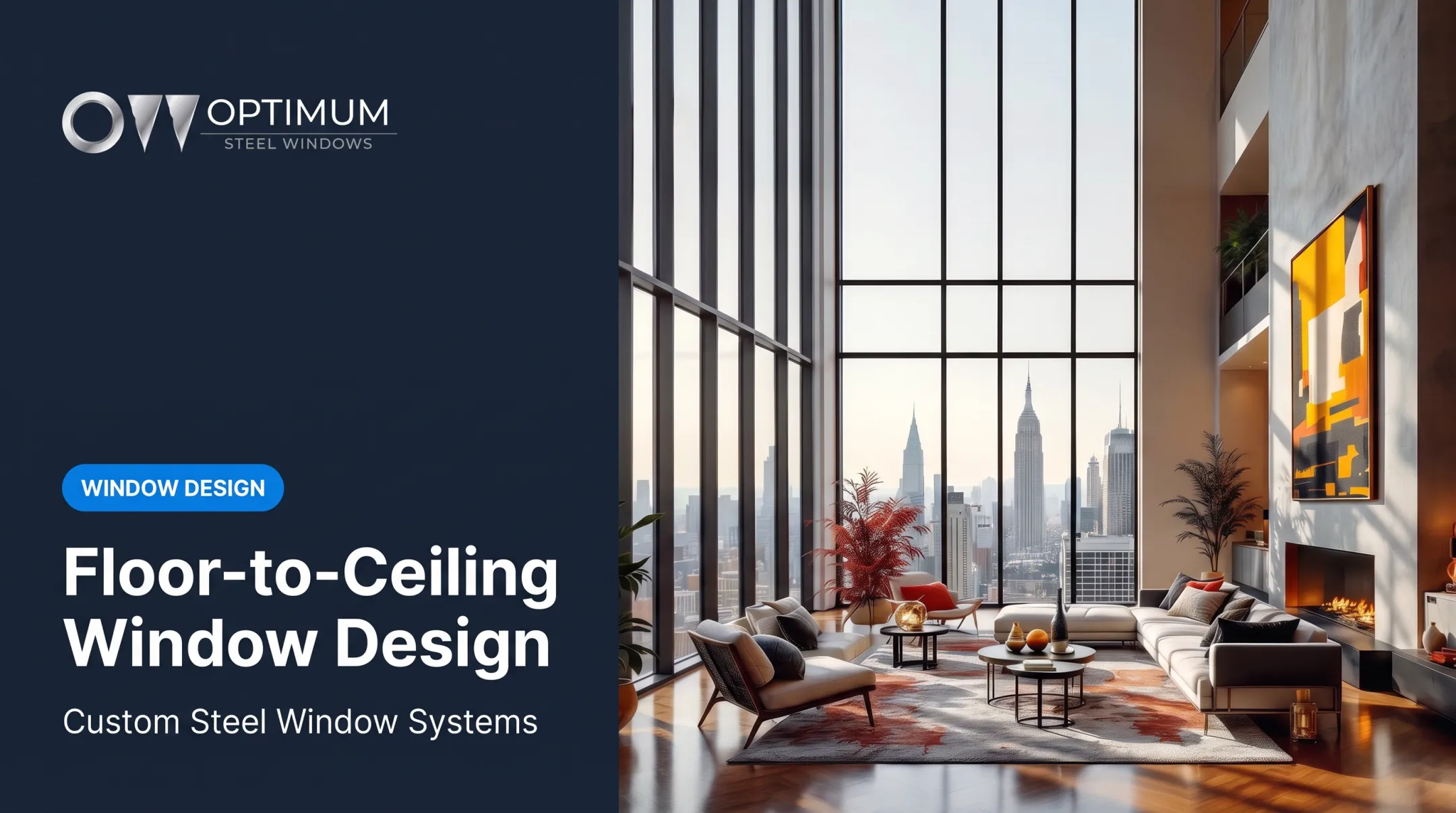
Applications run from modern homes and farmhouse renovations to lofts, adaptive-reuse buildings, commercial spaces, institutions, and landmark restorations. Optimum Window's work reflects this spread: a Park Slope townhouse with a large multi-pane black steel window, a Grand Central arched black steel window wall, and a Manhattan duplex with black-framed steel facing a skyline.
The same color gives different results depending on:
- Frame width and sightline
- Operation type
- Grill pattern
- Glass area
- Surrounding materials
Framing views, and when black is too much
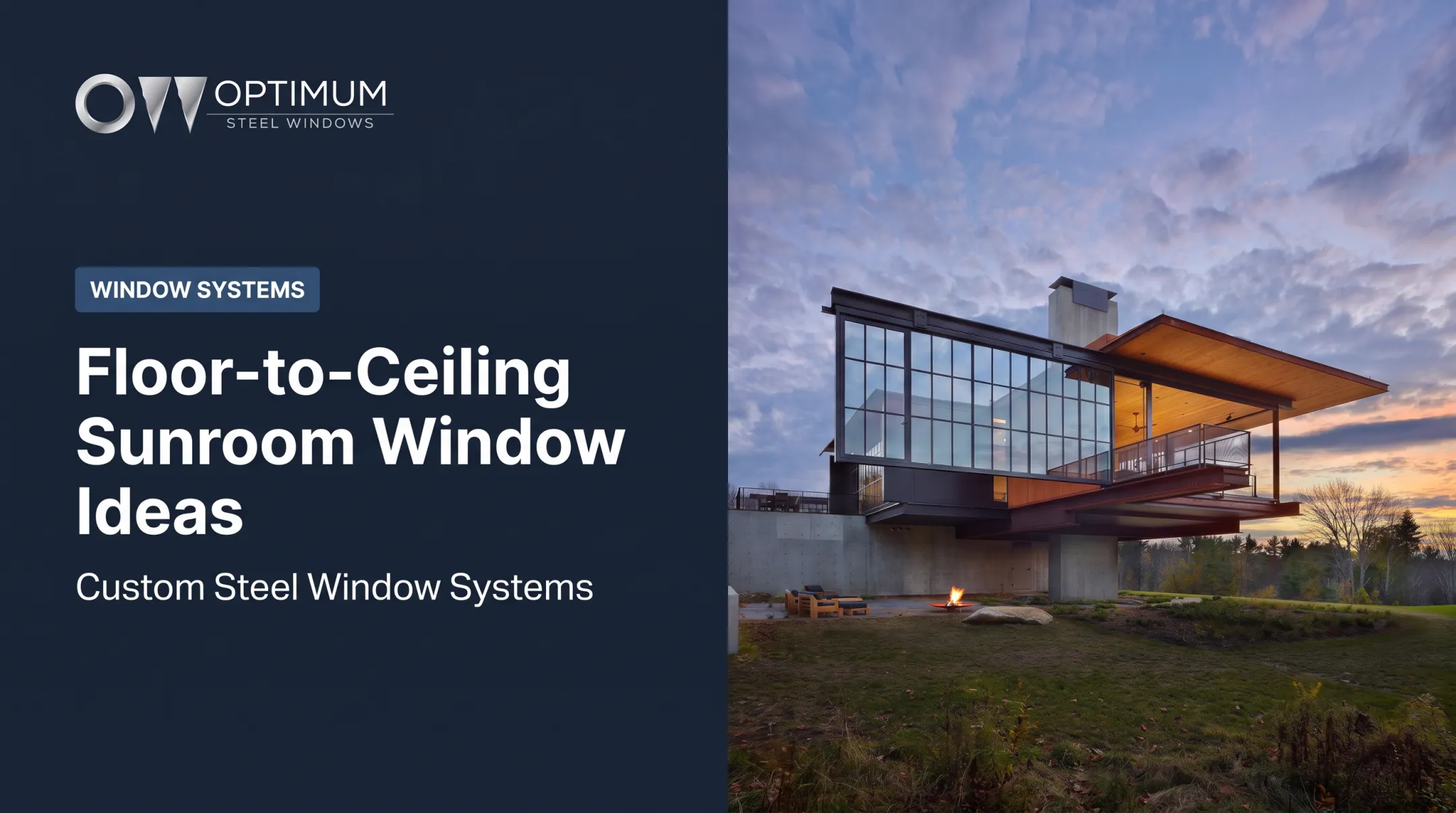
A dark perimeter works like a picture frame. On a Montana custom home, dark steel profiles border the landscape while warm interior finishes soften the room.
Black can also overpower. Small rooms, heavily patterned interiors, and façades already crowded with dark accents can feel heavy. Thick frames make this worse; slim ones help.
Black Window Materials, Performance, and Maintenance
Comparing the main frame materials
A black finish does not make different materials equivalent. Compare the whole assembly.
| Material | Key traits |
|---|---|
| Steel | Strong, allows slim sightlines and large glass; available with or without a thermal break |
| Aluminum | Strong and light, but conducts heat; a thermal break reduces heat flow |
| Vinyl | No painting, good moisture resistance; insulated cavities improve performance |
| Fiberglass | Dimensionally stable; cavities can be insulated |
| Wood / clad wood | Insulates well but needs upkeep; cladding cuts maintenance |
Those traits draw on the Department of Energy's window guidance and the Steel Window Institute. The DOE comparison does not quantify steel or measure black surface temperatures, so treat material labels as a starting point, not a rating.
Thermal performance and solar heat
Dark surfaces can absorb more solar heat. Real-world results still depend on frame material, thermal breaks, glazing, shading, orientation, and climate.
Rigid PVC profiles in any color from white to black must meet AAMA 303 heat-build-up requirements. No universal black-frame temperature limit exists across materials.
Look for NFRC-rated numbers:
- U-factor: heat escaping; lower is better
- SHGC: solar heat admitted; lower resists more heat
- Air leakage: air passing through the unit; lower is better
- Condensation resistance: higher is better
For reference, Optimum Window's RTS-430i lists U-factors of 0.15 to 0.23 and SHGC of 0.18 to 0.22 with triple glazing. NFRC ratings use fixed conditions and a set product size, so they compare products rather than guarantee field results.

Finishes, fading, and weather exposure
Finish types behave differently under UV, moisture, scratches, and harsh weather: powder-coated, painted, laminated, integral, and clad. The AAMA 2603, 2604, and 2605 specifications grade organic coatings on aluminum in increasingly stringent tiers. They are performance specifications, not warranties.
Optimum's HR4700 and HR4500 steel systems use an electrostatically applied polyester powder coat over a zinc-rich epoxy primer. The finish meets AAMA 2604 and includes a 10-year powder-coat warranty. Confirm terms for the specific product you're buying.
Care basics: Wash aluminum-clad exteriors with mild detergent and water at least every three months, and more often near salt water. Follow your manufacturer's instructions. Ask Optimum for more cleaning specifics based on series.
Interior and exterior color configurations
Some systems are black inside and out. Others pair a black exterior with white, wood, or bronze inside. This would be considered a two-tone finish.
Interior finish changes room brightness, trim coordination, and how heavy the frame feels. A lighter interior can soften the look and leave more flexibility if you redecorate.
Performance requirements beyond appearance
Check these before you commit:
- Structural ratings and water and air resistance (NAFS covers material-neutral requirements)
- Glass specifications
- Impact approvals; Miami-Dade's Product Control Search lists approved products
- Fire ratings (UL 9, NFPA 257 test references)
- Security requirements
- Historic-preservation criteria
Review shop drawings, product data, and installation details. Don't select on looks alone.
Black Window Design Ideas: Exterior and Interior Pairings
Exterior color combinations
Black frames work against light and natural exteriors:
- White, cream, pale gray, and greige
- Natural wood, brick, and stone
- Muted green or blue
Higher contrast feels bolder; softer pairings feel calmer. Optimum describes black powder coat as "bold contrast" and dark gray as a "modern, neutral frame."
Trim and façade proportions
White or light trim makes black frames stand out. Minimal or same-color trim feels more integrated and contemporary. Frame size, window groupings, grill patterns, and opening proportions decide whether black supports the architecture or overwhelms it.
Interior palettes and materials
Black frames pair well with:
- White walls and warm neutrals
- Exposed brick, natural wood, and stone
- Metal accents
In this sitting area, Optimum paired black steel grid bi-folding doors with warm tones.
Repeat black in small doses through lighting, cabinet hardware, furniture, and picture frames. That ties the windows to the room without making it dark.
Privacy, glare, and window treatments
Uncovered black windows show off the frame and view. Bedrooms, bathrooms, street-facing rooms, and sunny openings may need shades, curtains, or privacy glass.
Plan treatment placement, stack-back space, and visible hardware early so coverings don't hide the frame.
Historic and custom architecture
Narrow-profile steel systems can help preserve industrial, landmark, and adaptive-reuse buildings. NPS Preservation Brief 13 recommends retaining significant historic metal windows where possible, and warns that insensitive replacement diminishes character. It doesn't prescribe black as the finish, so confirm preservation requirements and approvals.
Custom architectural systems differ from catalog residential picks. They may require detailed measurements, approved shop drawings, specialty glazing, or made-to-order fabrication.
Cost and Value: What Affects the Price?
No universal price for black windows exists. A realistic US estimate depends on the number and size of openings, material, window type, glass package, finish, hardware, customization, installation complexity, and local labor.
Common drivers to consider regarding cost:
- Premium materials such as steel
- Specialized coatings or dual-color configurations
- Custom dimensions and narrow sightlines
- Large glass areas
- Added performance requirements
Material choice, size, and customization drive the final figure more than frame color. Steel and bronze systems vary widely by opening and specification. Treat any published range as a ballpark and request a project quote.
How to Choose and Specify Black Frame Windows
A practical selection checklist
Define these before comparing products:
- Architectural style
- Interior and exterior color scheme
- Frame sightline and operating type
- Grill pattern and opening sizes
- Privacy and maintenance needs
- Budget
Then get physical finish samples and view them in your site's daylight. Black tones, sheen, and trim contrast look different in photos.
Match the product to project performance
Confirm these items before you finalize a product:
- Glass performance and thermal-break details
- Structural capacity and weather ratings
- Impact approvals, fire ratings, and security features
- Historic or landmark requirements, when they apply
Bring the architect, builder, glazing contractor, manufacturer, and installer together early. Settle dimensions, flashing, drainage, tolerances, and finish protection before fabrication.
Custom metal systems for black frames
For architects, glazing contractors, builders, developers, and restoration teams, Optimum Window builds custom metal window and door systems in Ellenville, New York. Standard colors include Satin Black Texture, and black powder coat is a listed finish option. Confirm black availability for the system you select.
The company's capabilities include:
- Made-to-order steel, bronze, stainless steel, and aluminum systems
- Thermally broken systems such as RTS430+
- Fire-rated options in 45-, 60-, and 90-minute ratings
- Impact-rated and security systems
- NFRC and AAMA certifications
Not every system includes every feature, so match the product line to your requirements.
Frequently Asked Questions
How much do black windows cost?
Price varies by material, size, glass, finish, customization, installation, and project requirements. A project-specific quote is more useful than any universal figure.
Why are black windows more expensive?
Any premium usually comes from specialized finishes, dual-color configurations, premium materials, custom fabrication, or performance requirements. Black itself isn't necessarily the cause.
Are black windows black on the inside too?
Some are black inside and out; others pair a black exterior with a white or wood interior. Availability depends on the manufacturer and material.
What house and trim colors work best with black windows?
Light neutrals, brick, stone, natural wood, and muted colors all work, with white trim for contrast or dark coordinated accents. The best pairing depends on the home's architecture and existing palette.
Are black windows still in style?
Black frames have both historic and contemporary associations and remain versatile. Profile, proportions, material, and fit with the architecture matter more than trend status.
What are the best black windows?
It depends on material preference, climate, energy goals, sightline, budget, operating style, and finish. Structural, impact, fire, security, or historic requirements may narrow the field.